Many people are turning to GLP-1 medications such as Ozempic, Wegovy, Zepbound, and Mounjaro to support their weight loss goals or to manage prediabetes and diabetes. These medications can be helpful, but they do not come without side effects. Common side effects include nausea, diarrhea or constipation, fatigue, depression, muscle wasting, and hair loss. It is not uncommon for these side effects to cause patients to stop treatment altogether. Rapid weight loss can also affect your gallbladder, liver, and kidneys.
The good news is that most of these side effects can be managed. Naturopathic medicine takes a holistic approach, looking at what is happening underneath the symptoms so you can stay on your treatment comfortably and protect your long-term health.
Please do not stop or change a prescribed medication on your own. We are happy to work alongside your prescribing provider.
Digestive Side Effects: Nausea, Constipation, and Diarrhea
Digestive symptoms are very common, because these medications slow the movement of food through your digestive tract and signal the brain’s fullness response, which often triggers the nausea response as well. Staying well hydrated matters for all of these symptoms. When your appetite drops, your fluid intake usually drops with it, and many people simply forget to drink because they no longer feel hungry.
Nausea
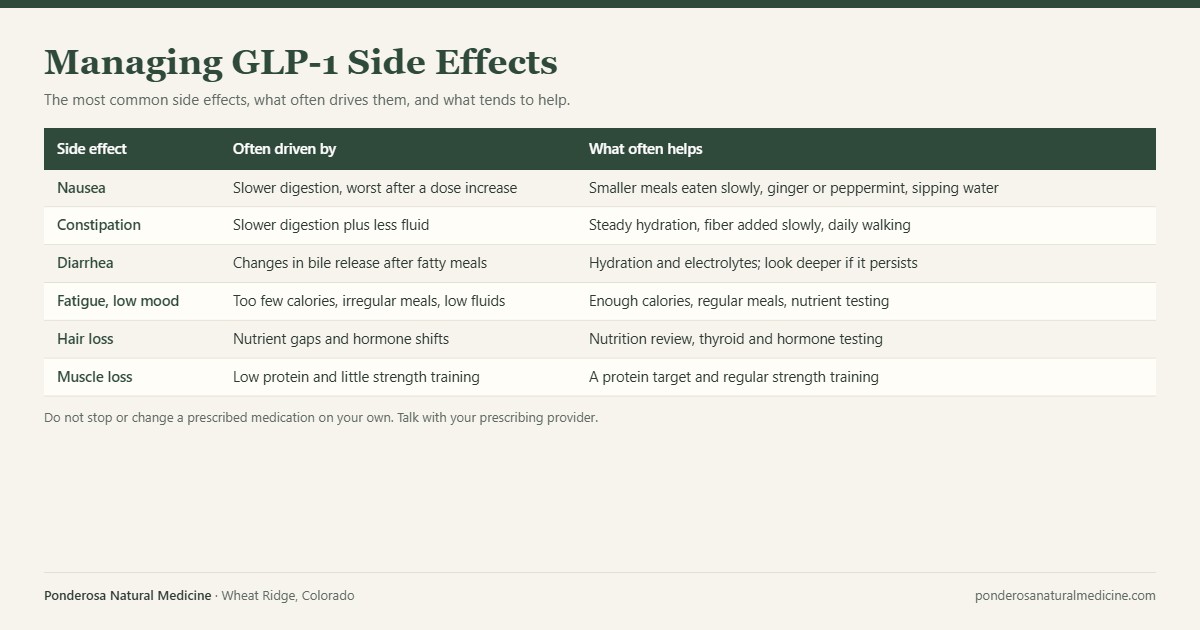
Nausea is often worst in the first days after a dose or a dose increase. Smaller meals, eating slowly, and stopping when you feel full can all help. Herbal medicine such as ginger and peppermint can ease symptoms as well. Sip water steadily through the day rather than drinking large amounts with meals, since a full stomach can make nausea worse.
Constipation
Constipation is one of the most common complaints on these medications, because food is moving more slowly and fluid intake is often lower. Slower digestion plus less water is a recipe for hard, difficult stools. What helps:
- Drink water steadily through the day, and keep drinking even when you are not thirsty
- Include fiber from vegetables, fruit, chia, or ground flax, increasing it slowly
- Keep moving, since daily walking supports digestive motility
- Ask about magnesium and other supportive options before reaching for stimulant laxatives
Diarrhea
Some people have the opposite problem, particularly loose stools after fatty meals, which can be related to changes in how the gallbladder releases bile. Ongoing diarrhea also causes fluid and electrolyte losses, so hydration becomes even more important. Persistent diarrhea is worth investigating rather than simply enduring.
When Digestive Symptoms Persist
For ongoing symptoms, it is worth looking deeper. Digestive stool testing or breath testing can identify underlying imbalances that GLP-1 medications may be making worse. For example, some research indicates that GLP-1 medications can significantly increase the risk of developing small intestinal bacterial overgrowth (SIBO). These medications may also affect the way your gallbladder releases bile to digest fats.
A digestive stool analysis or SIBO breath test can show what has changed in your gut and what is driving your symptoms. Treatment may then include specific herbs for bacterial or fungal imbalances, bile acids and gallbladder support for fat digestion, and probiotics chosen for your particular needs.
When to Contact Your Provider Right Away
Some symptoms need prompt medical attention rather than watchful waiting. Contact your prescribing provider or seek urgent care if you have severe or persistent abdominal pain, especially in the upper right abdomen, pain that radiates to your back or shoulder, vomiting that will not stop, fever, yellowing of the skin or eyes, or signs of dehydration. These can be signs of gallbladder or pancreas problems that should be evaluated right away.
Fatigue and Depression
Fatigue and depression while using GLP-1 medications are often caused by indirect effects of the medication, and they can be managed effectively with nutritional evaluation and support.
People on GLP-1 medications often reduce their calorie intake drastically. Calories are energy, and if you are not getting enough, you will feel fatigued and sometimes low. Irregular eating can also cause drops in blood sugar that make these symptoms worse. It is important to still get enough calories to meet your basal metabolic rate, which is the energy your body needs for its daily functions.
Hydration deserves attention here too. Low fluid intake is an easy thing to overlook when you are not thirsty, and it is a common and very fixable contributor to fatigue, headaches, and constipation.
Food aversions are common as well. Many people end up eating a narrow range of foods, or only easily digestible ones, to manage their digestive symptoms. Over time, that can lead to or worsen nutritional deficiencies.
A naturopathic doctor will assess your nutritional intake to determine the underlying cause, recommend changes to the amount and types of food you are eating, and evaluate whether you need vitamin and mineral testing or supplementation. Common deficiencies include B vitamins, zinc, vitamin D, minerals, and macronutrients such as protein and fiber.
Hair Loss
Hair loss while on GLP-1 medications is also often related to vitamin, mineral, and macronutrient deficiencies. Significantly decreasing calorie intake can lead to other metabolic changes as well, such as shifts in thyroid or reproductive hormone levels. A naturopathic doctor will take a holistic approach, assessing changes in hormone function alongside an analysis of your nutrition, to uncover and treat these imbalances.
Muscle Wasting
Muscle wasting happens when weight loss medications cause a decrease not only in fat but also in muscle mass. Losing muscle is a real concern for long-term health, since muscle supports your metabolism, blood sugar control, strength, and independence as you age.
Muscle loss may be caused by too little calorie intake and not enough protein in your diet. It can also come from a lack of focus on exercise and strength training. To counteract the effects of GLP-1 medications on muscle, it is important to prioritize strength training and to get enough protein. A naturopathic doctor will assess your lifestyle and diet to determine the best support for your needs.
Frequently Asked Questions
Should I stop my medication if I have side effects?
Not on your own. Talk with your prescribing provider about any side effects you are having. Many side effects can be managed, and our goal is to help you stay comfortable on your treatment rather than to replace it.
How much protein do I need on a GLP-1 medication?
Protein needs vary with your body size, activity level, and health history, and they are often higher than people expect during weight loss. We calculate a target with you, then find practical ways to reach it even when your appetite is low.
How much water should I be drinking?
More than thirst alone will tell you, since appetite and thirst often drop together on these medications. We set a practical daily target with you and look at electrolytes when needed, especially if you are having diarrhea or exercising regularly.
Can I take supplements while on a GLP-1 medication?
Often, yes, though it is best to base them on testing rather than guesswork. We look at your labs, your diet, and your symptoms to decide what you actually need, and we check for any interactions with your current medications.
Do I need lab testing?
It depends on your symptoms. Testing may include vitamin and mineral levels, blood sugar markers, thyroid and hormone testing, liver and kidney function, and digestive stool or SIBO testing when gut symptoms persist.
Can I still work with you if I plan to stay on the medication long term?
Absolutely. Much of our work is helping people stay well while they are on these medications, and supporting the diet, muscle, and nutrient side of things that medication alone does not address.
Summary
GLP-1 medications are helpful for a variety of conditions and are often prescribed for weight loss. They directly affect how your digestion functions, which can lead to uncomfortable side effects along with longer-term shifts in your microbiome and gallbladder function. Changes in calorie intake and in the nutritional makeup of your diet may contribute to fatigue, depression, hair loss, and muscle wasting.
Your diet, hydration, and lifestyle are still extremely important while you are taking a GLP-1 medication. Drinking enough water is one of the simplest and most overlooked parts of feeling well on these medications, and it affects digestion, energy, and headaches alike. It is worth remembering that weight is not the only measure of health. A naturopathic doctor will assess your dietary intake, lifestyle, and exercise, and may test for vitamin deficiencies, digestive function and microbial imbalances, hormone levels, blood sugar, and liver and kidney function. Treatment is aimed at optimizing these areas to support your overall health and wellness.
If you are taking a GLP-1 medication and dealing with side effects, or you want to protect your muscle and nutrient status while you lose weight, we can help. Learn more about our metabolic health care or book an appointment with Dr. Karrina Wallace, ND in Wheat Ridge, Colorado.