Homeopathy vs Naturopathy: A Clear, Honest Comparison
[Three words used as if they mean the same thing. They don’t, and the difference decides who you should book with.]
Homeopathy vs naturopathy is one of the most common mix-ups in natural health, and herbal medicine gets folded into both without anyone stopping to check. Search any of the three and you’ll land on pages that treat them as interchangeable words for the same idea. They aren’t. One is a specific system with its own rules for making medicine. One is a licensed profession. One is the use of plants in doses a lab could weigh. This post separates them, plainly, so you can work out which one you were looking for.
Table of Contents
What Is Homeopathy?
How Homeopathic Medicine Gets Made
Herbal Medicine Uses Doses You Can Weigh
Naturopathy Is a Profession, Not a Method
Where Homeopathic Remedies Fit In
What the Evidence Shows on Each Side
Questions Worth Asking Any Practitioner
Which One Were You Actually Searching For?
What a Visit in Wheat Ridge Involves
FAQs About Homeopathy vs Naturopathy
What Is Homeopathy?
Homeopathy is a complete medical system founded in Germany in the late 1700s by a physician named Samuel Hahnemann. Two ideas hold it together. A substance that causes symptoms in a healthy person is used to address similar symptoms in someone unwell, and that substance is diluted through repeated steps before anyone takes it.
The first idea has a Latin tag, similia similibus curentur, which English-speaking practitioners shorten to “like cures like” on the label and in the clinic. Onion makes healthy eyes water and a nose run, so a homeopathic preparation of onion has traditionally been selected for a streaming cold.
Prescribing runs on the symptom picture rather than the diagnosis. Two people who walked out of a clinic with the same disease name can be given two different remedies. The homeopath is matching the pattern of how each person feels, sleeps, and reacts to heat and cold.
That matters more than it sounds. It shapes everything downstream, including how the field gets tested and how a consultation is structured.
Sessions in classical homeopathy tend to run long for that reason. The practitioner is collecting a wide set of details, many of which would look irrelevant on a standard intake form, and building a single remedy choice out of them. Anyone weighing homeopathy vs naturopathy on the basis of appointment style will find both take time, for different reasons.
How Homeopathic Medicine Gets Made
Serial dilution is what makes homeopathic medicine unlike anything else on this page. A starting material is diluted, shaken hard, then diluted again, and the cycle repeats a set number of times.
Labels carry the count. An X on the bottle means each step was a 1 in 10 dilution. A C means 1 in 100. So a 30C preparation has been through thirty rounds of 1 in 100, with vigorous shaking, called succussion, between each one.
Run that arithmetic past about the twelfth C and you cross Avogadro’s number. At that point no molecule of the starting material is likely to remain in the dose you swallow.
Homeopaths don’t dispute the arithmetic. Their position is that the preparation process itself, and the succussion in particular, is what carries the action, and that the diluent holds something the chemistry doesn’t capture. That single claim is the dividing line between homeopathy and every other approach described here.
The finished product usually arrives as sugar pellets, liquid drops, or a small tablet that dissolves under the tongue. Nothing on that pellet looks or tastes like the starting material, which is often the first thing that surprises people.
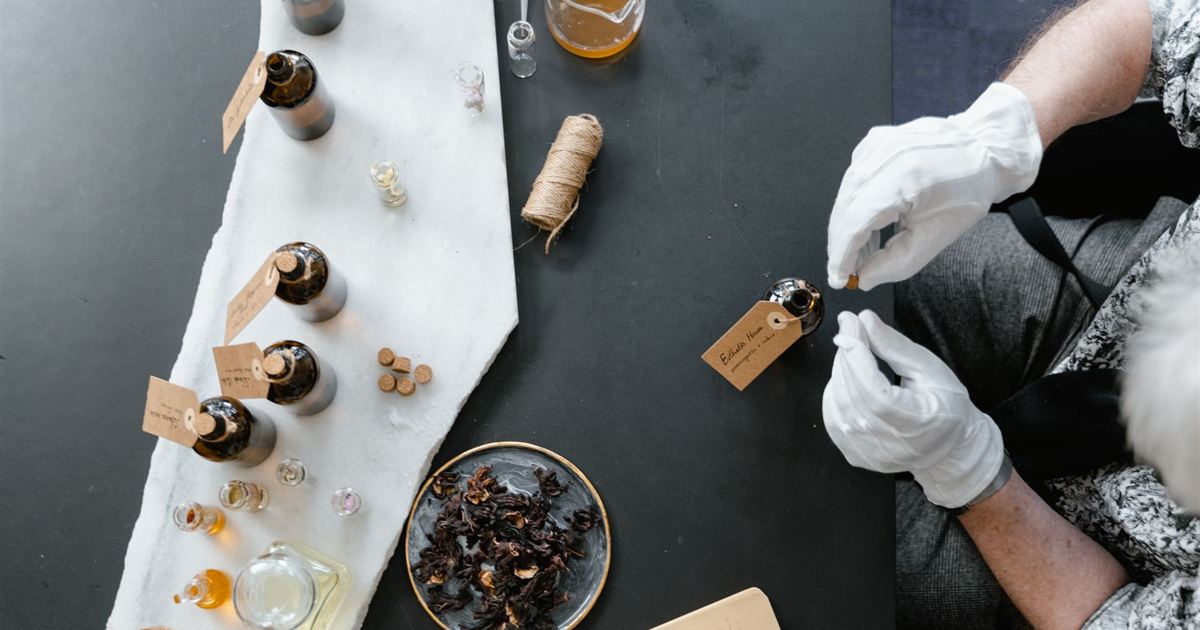
!Homeopathy vs naturopathy compared, dilution vials beside weighed dried herbs
Hold that image next to a jar of dried root and the contrast does the explaining for you.
Herbal Medicine Uses Doses You Can Weigh
Herbal medicine sits at the opposite end of that scale. The plant compounds are still in the bottle, in amounts a laboratory can measure.
A tincture is plant material soaked in a blend of alcohol and water. A decoction is root or bark simmered for a long stretch. A capsule may hold ground herb, and a standardized extract has been processed until a marker compound hits a stated percentage on the label. Milk thistle standardized to silymarin works this way, and so does St. John’s wort standardized to hypericin.
Since the compounds are present, herbs behave like other pharmacologically active substances. Dose changes the effect. Timing matters. Interactions are real.
St. John’s wort is the textbook case. It has been documented to speed up how the liver clears certain prescription drugs, which drops their blood levels, and that includes medications where a drop is a serious problem. You can read the published work on that through PubMed.
Anything strong enough to help is strong enough to interfere with something. That’s precisely why Custom Herbal Medicine at Ponderosa starts with your full medication list rather than a symptom.
Anyone weighing homeopathy vs naturopathy should notice what just happened there. A material dose brings a safety conversation with it, and a practitioner who skips that conversation is skipping the part that protects you.
Naturopathy Is a Profession, Not a Method
Naturopathy isn’t a technique at all. It’s a profession, with schooling, licensing exams, and a scope of practice defined state by state.
A naturopathic doctor completes a four-year graduate program at an accredited naturopathic medical school, sits board examinations, and then practices within whatever the state allows. What a naturopathic doctor may do in one state differs from what the same training permits in another, which is a genuine source of public confusion and not something the profession hides.
In Colorado, naturopathic doctors are registered through the Department of Regulatory Agencies, known as DORA. Dr. Karrina Wallace, ND holds that registration, trained at National University of Natural Medicine, and has served on the board of the Colorado Association of Naturopathic Doctors since 2015.
So the homeopathy vs naturopathy question isn’t a fair fight, structurally. One of them is a method of preparing and prescribing medicine. The other is a licence to practice. Comparing them is like comparing acupuncture to dentistry.
The naturopathic toolkit is wide. Nutrition, botanical medicine, lifestyle counselling, physical medicine, and lab-based assessment all sit inside it.
Where Homeopathic Remedies Fit In
Homeopathic remedies appear in the curriculum at some naturopathic medical schools, and whether an individual naturopathic doctor uses them varies enormously from practice to practice. Two NDs with identical degrees can run completely different clinics.
This is where most of the search confusion comes from. Over the past few decades “homeopathic” drifted in everyday speech into a loose word for anything natural, sold in a health store, or not written on a prescription pad. Plenty of people typing homeopathy vs naturopathy into a search bar aren’t asking about serial dilution at all. They want a doctor who’ll look at diet, sleep, stress, and lab work before reaching for a pad.
Ponderosa Natural Medicine doesn’t provide homeopathic treatment. The botanical service here is Custom Herbal Medicine, which is the material-dose discipline described above.
Worth saying plainly, since a lot of pages blur it.
What the Evidence Shows on Each Side
The National Center for Complementary and Integrative Health, part of the National Institutes of Health, states that there’s little evidence supporting homeopathy as effective for any specific health condition. You can read their position directly at NCCIH.
Homeopaths raise a design objection worth understanding. Since remedies are matched to the individual rather than the diagnosis, a trial that gives every participant the same remedy isn’t testing the way the system is meant to work. Critics answer that trials can be built to accommodate individualized prescribing, and some have been. That disagreement is live, and this post isn’t going to settle it for you.
Herbal medicine carries a different problem. There’s a large published literature, and its quality swings wildly. Sample sizes are often small, preparations differ between studies of the same plant, and a result from a petri dish gets quoted on a label as though it came from people.
Neither field is well served by overstatement. The honest summary is that the amount and type of evidence differs between them, and you’re entitled to ask any practitioner what stands behind what they’re recommending to you.
Most people researching homeopathy vs naturopathy aren’t trying to referee a scientific argument. They want to know whether the person they book with will be straight with them about what’s known and what isn’t.
Questions Worth Asking Any Practitioner
Ask before you book, not after. A good practitioner will answer all of these without getting defensive, and the answers tell you more than any comparison article can.
What are you licensed or registered to do in this state?
Which of these approaches do you actually use in practice?
What evidence sits behind what you’re suggesting for me?
How will this interact with my prescriptions?
What would make you refer me somewhere else?
That fourth one carries real weight. A practitioner working with material-dose botanicals needs your full medication list, since the interactions are pharmacological and not hypothetical.
The fifth one matters just as much. Anyone who says there’s nothing outside their scope is telling you something about their judgment.
Which One Were You Actually Searching For?
Match your goal to the column. If you want a preparation made by serial dilution and prescribed on a total symptom picture, that’s homeopathy, a distinct field with its own training. If you want plant compounds in measurable doses, that’s herbal medicine. If you want a licensed clinician who assesses the whole case first, that’s naturopathy.
Homeopathy
Herbal medicine
Naturopathy
What it is
A prescribing system
A class of medicine
A licensed profession
Dose
Serially diluted
Weighable, material
Varies by tool used
Chosen by
Full symptom picture
Plant pharmacology and your case
Findings from the full workup
Colorado status
Not a registered profession
A modality, not a licence
Registered through DORA
Offered at Ponderosa
No
Yes, as Custom Herbal Medicine
Yes
Read the bottom row twice. It’s the row people get wrong when they book.
One more distinction hides in that table. Homeopathy and herbal medicine are things a practitioner does, so either can appear inside a naturopathic practice, a different practice, or no practice at all. Naturopathy is what a practitioner is permitted to be. Framing homeopathy vs naturopathy as two competing products is what sends people to the wrong door.
What a Visit in Wheat Ridge Involves
An intake comes first, and it runs long. History, medications, supplements you’re already taking, sleep, digestion, stress, and what you’ve tried before all get covered before anything is recommended.
Testing follows where it earns its place. Functional lab and holistic diagnostic tests, comprehensive thyroid testing, and digestive assessment are all available, and none of them is ordered by default.
The plan is built from the findings. It might draw on nutrition and lifestyle counseling, Custom Herbal Medicine, quality nutritional supplements, detoxifying hydrotherapy, physiotherapy for discomfort, or auricular therapy.
Dr. Wallace practices at 4251 Kipling Street, Suite 160 in Wheat Ridge, and serves Denver, Aurora, Littleton, Lakewood, Arvada, Golden, Evergreen and the surrounding Denver Metro. Telehealth is available statewide in Colorado.
This article is educational and isn’t a substitute for individual medical advice from a qualified clinician who knows your history.
FAQs About Homeopathy vs Naturopathy
Is homeopathy the same as naturopathy?
No. Homeopathy is a specific prescribing system built on serial dilution and the like-cures-like principle. Naturopathy is a licensed profession whose practitioners may use nutrition, botanical medicine, physical medicine, lifestyle counselling, and laboratory testing. A naturopathic doctor may or may not practice homeopathy, and many don’t. The homeopathy vs naturopathy comparison puts a method next to a licence, which is why it confuses so many people.
Is herbal medicine a type of homeopathy?
No, and this is the single most common mix-up. Herbal medicine uses material doses, meaning the plant compounds are physically present and measurable in what you take. Homeopathic medicine is diluted in repeated steps, often past the point where any starting molecule remains. Both may use a plant as the raw material, and the resulting products work on entirely different premises.
Does a naturopathic doctor prescribe homeopathic remedies?
Some do, some don’t. Homeopathic remedies appear in parts of naturopathic training, and use in practice varies widely between individual clinicians. Ponderosa Natural Medicine doesn’t offer homeopathic treatment. Its botanical service is Custom Herbal Medicine, where formulas are built from your intake, your medication list, and your lab findings.
Which is better for me, homeopathy vs naturopathy?
That depends on what you want from the appointment. Homeopathy vs naturopathy isn’t a like-for-like choice, since one is a prescribing method and the other is a regulated profession with a broad scope. If you want someone licensed in Colorado to assess your whole case, order labs where useful, and build a plan across diet, lifestyle, and botanicals, that’s naturopathic care.
Are homeopathic doctors and naturopathic doctors regulated the same way in Colorado?
Naturopathic doctors are registered with the Colorado Department of Regulatory Agencies, which sets education and examination requirements. Homeopathy isn’t a separately registered profession in Colorado. Anyone comparing homeopathy vs naturopathy for credentialing reasons should check a practitioner’s registration status directly with DORA before booking.
What does Ponderosa actually offer instead of homeopathy?
Functional lab and holistic diagnostic tests, nutrition and lifestyle counseling, Custom Herbal Medicine, physiotherapy for discomfort, lifestyle coaching, detoxifying hydrotherapy, quality nutritional supplements, and auricular therapy. Every plan starts with a full intake rather than a product.
Book Your Visit With Dr. Wallace
You came here trying to name the thing you needed. Now you can.
Sorting out homeopathy vs naturopathy is worth the ten minutes it takes, since the answer decides which appointment actually helps.
Maybe you wanted a licensed clinician who takes a full history, orders testing where it’s warranted, and builds a plan around plant medicine in doses that can be measured. That’s naturopathic care. That’s what happens at this clinic.
Book my consultation and get a plan built from your case rather than from a category name.
Ready to Better Understand Your Stress Response?
You do not have to keep pushing through fatigue, burnout, poor sleep, or stress-related symptoms without answers. If you are ready for a more thorough evaluation, Ponderosa Natural Medicine can help you take the next step.